
Bedroom Envy ❤️🔥
The problem with Pinterest + the aestheticization of our inner selves

I have lost many fights with my bedroom furniture.
As my housemates know all too well, tackling my 6ft plus wardrobe from one corner of my room to another at 11pm is not an uncommon occurrence. It’s true: I can’t stop rearranging my bedroom. It’s an obsession, a compulsion, my shins are constantly covered in yellowing bruises, and it’s all Pinterest’s fault.
Now, before I point the finger, I will firstly say that I love Pinterest. It’s one of my favourite platforms, hailed as the artistic, quasi-intellectual cousin of the brain rot apps. I love creating boards and categorising quotes and ideas, outfits and decor. However, like all social media, it still comes with an unwanted side order of comparison.
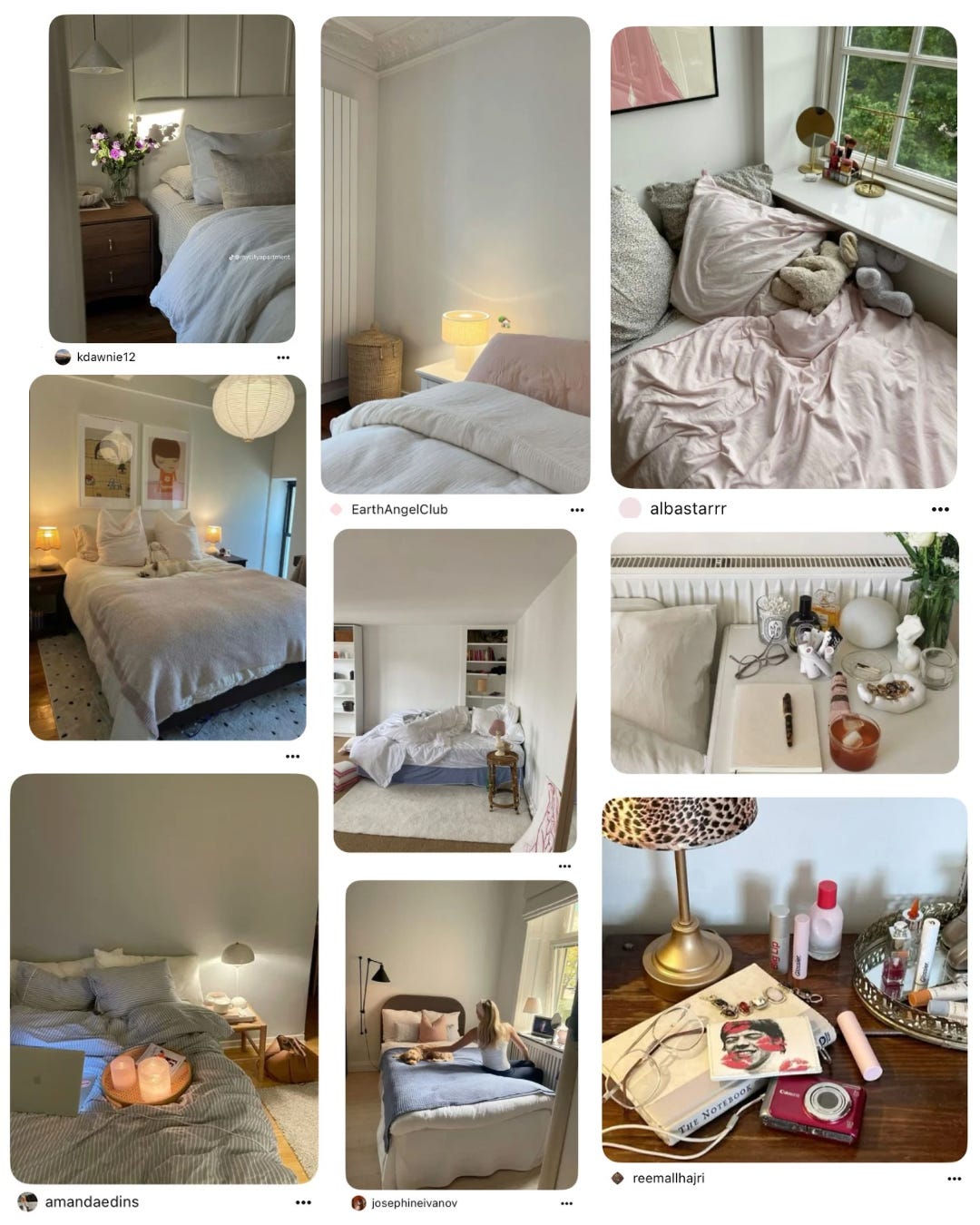
My most used board, titled ‘room inspiration’ (creative, I know), contains over a thousand pins, and through this, the vision of my perfect bedroom emerged:
Airy and light but still cozy, with expensive looking linen sheets
Full of trinkets, but not overly cluttered
Tidy, but in a casual, lived-in way, with aesthetically pleasing belongings that seamlessly blend in
A perfectly crafted bedside table
No boyfriend’s Playstation 5 or collection of tea stained mugs in sight
Does my room look like this? Absolutely not. My possessions never seem to fit together quite right, the washing basket is always overflowing, and, like a toxic ex, my floor-drobe just can’t seem to leave me alone. My rented room with slightly grubby walls and half broken furniture (circa 2004) will never look like my Pinterest board. There are certainly elements I can, and do, incorporate into my space, but the joy and inspiration I used to feel is definitely lacking in recent Pinterest endeavours.
When comparison culture seeps into every corner of our lives, what’s supposed to be a place of comfort and personal sanctuary, also becomes a place of performance and judgement. Our bedrooms are no longer private, even if we don’t share them online. Take, for instance, the covid pandemic and subsequent lockdown, where the boundary between public, private and professional spheres were erased for when our bedrooms suddenly became classrooms or offices too. Not to mention that in our current economic climate, many young adults can’t afford their own home and are house sharing or living with family. The bedroom, therefore, takes on a much more central function in our lives. It’s where we sleep, eat, get ready for the day, work, rest, consume media and pretty much live.
Historically, teen bedrooms have offered a physical space for young people to build and explore their identity. They’re a constantly developing mood board of who we are, decorated with visual and cultural markers - our favourite colours, the music we listen to, the books we read, photographs, memories and possessions. It represents our unique experiences, tastes, hobbies and lifestyles. This sense of ownership and selfhood, however far you choose to delve into it, is something you simply can’t build on Pinterest.
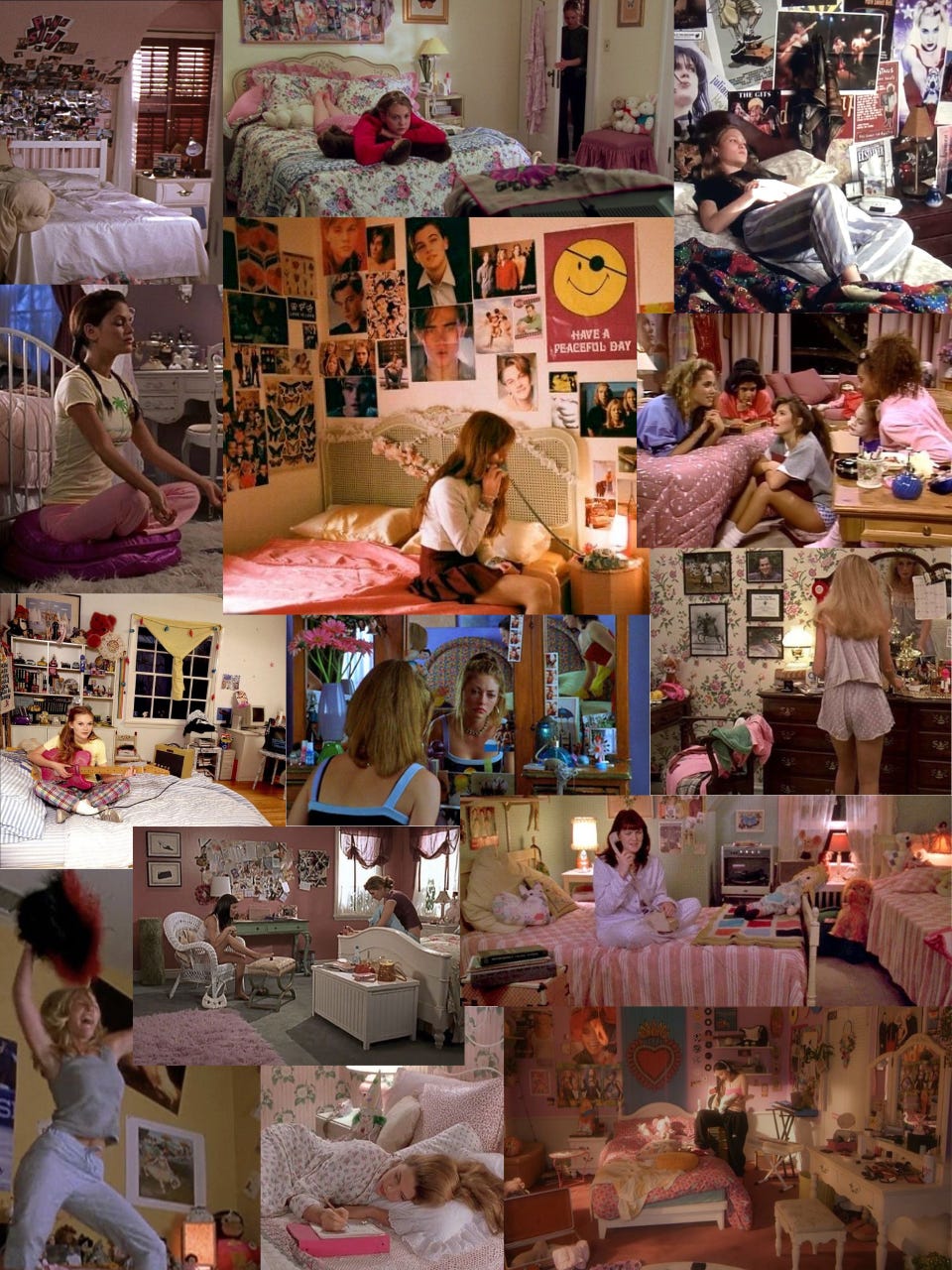
Nowadays, what was once a private process of self expression, is put on display in new ways, not only through social media. The site of the bedroom has become a figurative stage, the place our online performativity flows from. Instagram photo dumps neatly crafted from your bed, dating app swipes, TikTok reposts. As consequence, the bedroom becomes embroiled in the wider creation and romanticisation of our online-selves, of how we want to be perceived by others. Rather than a space to navigate our inner selves, it often becomes a performance of a certain, replicable online-based aesthetic: cottagecore, coquette, dark academia, clean girl, vanilla girl, coastal grandmother etc.
I’m certainly not saying there’s anything wrong with enjoying these, but is there an issue when we use aesthetics like cookie cutters, removing or hiding the physical artefacts of our own lives that don’t quite fit? And is there a problem when these aesthetics aren’t linked in any meaningful ways to subcultures, political stances, or values? What do they truly say about us beyond what we consume?
‘this may be a divisive take but... cultivating inspiration should not be "easy", you should have to seek out that tiny spark of excitement and continuously work for it. your life should be spent building a personal lexicon of movies, magazines, books, songs, people, parties, outfits, street corners etc. that are slowly stamped into your brain over time that alter your perception of your personal taste.’ - Emily North
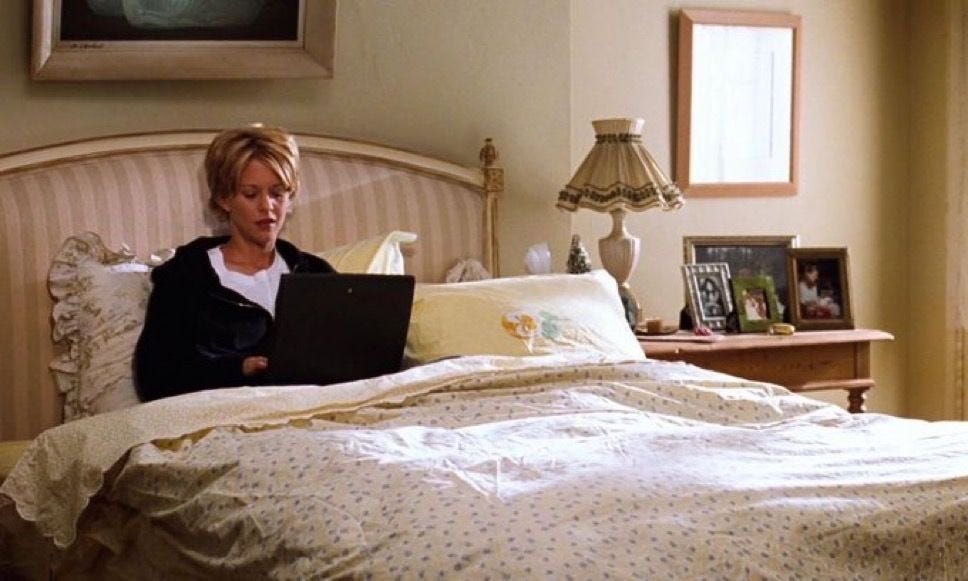
So, I’m putting my ‘bedroom inspo’ board on the back burner for now, as I’ve been suffering with some serious bedroom envy. In an online world that’s hyper-focused on constant self-improvement, I’m resisting the rotating urges to make my bedroom more relaxing, more productive, more functional, improve it’s feng shui, add more colour, get rid of all colour, so on and so forth. What I’ve realised is that my pursuit of a perfect bedroom is actually a pursuit to remove myself, to take out or tidy away what makes the space truly mine.
‘Bedrooms are worked upon, albeit at varying levels, and even when the space seems to change very little visually, the mere presence of a young person consuming within it, living out their social and cultural lives, means that it is a space that is never static.’ - Siân Lincoln
Whilst my love of rearranging furniture may never leave me, I’m starting to look at my bedroom as an evolving scrapbook of myself, rather than a draft of a future, finally perfected, Pinterest-worthy version. I love my bedroom. It’s the damn phone.